Researchers and specialists from the University of Tartu, the Estonian Academy of Arts, and the Tallinn City Museum will spend a year studying 16th‑century tapestries held at the Tallinn City Museum using interdisciplinary methods.
The year 2026 is special for Tallinn’s history, as three institutions have joined forces to research Tallinn’s invaluable early modern textile treasures. These include the Solomon-themed tapestries commissioned by the Tallinn town council, as well as verdures with plant motifs that were used as bench covers. One of the most significant artworks under study is the antependium of St. Olaf’s Church, commissioned by town councillor Lutke van Oyten, which is the only piece containing gold thread.
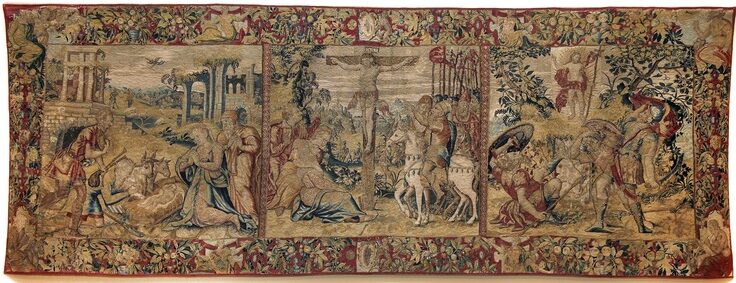
The project “Global and Local: The Precious Tapestries of Early Modern Tallinn” brings together the expertise of art historians, historians, scientists, collection managers, and conservators. In addition to applying historical and art‑historical methods, the project places strong emphasis on material and dye analyses. The project approaches the complete biography of the works—examining their creation in Netherlandish workshops, their later “careers” in Tallinn, and their afterlives in the early 20th century. Attention is given to the iconography and models of the works, as well as to the workshops and masters who produced them. The project supports the preservation, conservation, and future public display of this unique European cultural heritage.
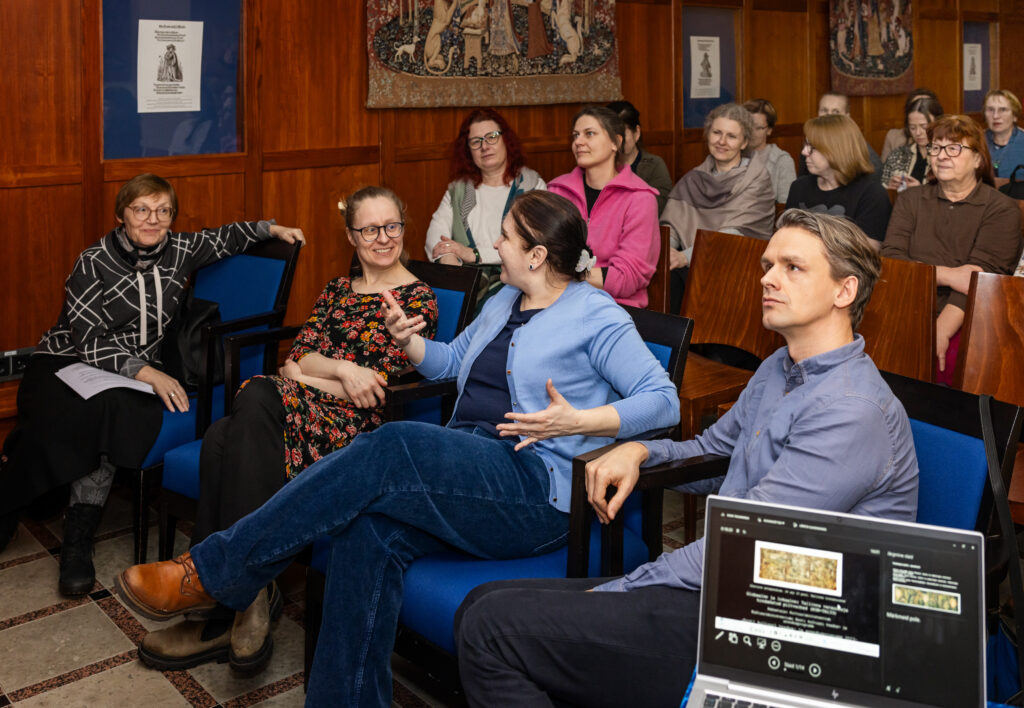
The project draws inspiration from the EU Horizon initiative Colour4CRAFTS, led by the University of Helsinki, with Riina Rammo heading the Tartu research group. Both Hannes Vinnal and Kerttu Palginõmm previously belonged to the project team. Colour4CRAFTS examines historical wool, yarn, and textile dyeing practices and explores how textile dyeing could be made more environmentally sustainable in the future. The project’s research results can currently be explored in an educational and popular format at the Estonian National Museum’s exhibition “The Colours of Our Clothes: the Local and the Global.” Wool and yarn-dyeing practices serve as a point of connection between the two projects. Colour4CRAFTS provided new insights into the dyes used in 18th–19th‑century folk costumes, revealing the presence of colonial dyes, including Mexican cochineal, brazilwood, and tropical indigo. These dyes, with their colonial backgrounds, had already reached Europe in the 16th century, around the time when the Netherlandish workshops produced the tapestries now held in Tallinn. This forms an important link between the two projects.
Analyses based on the international tapestry corpus
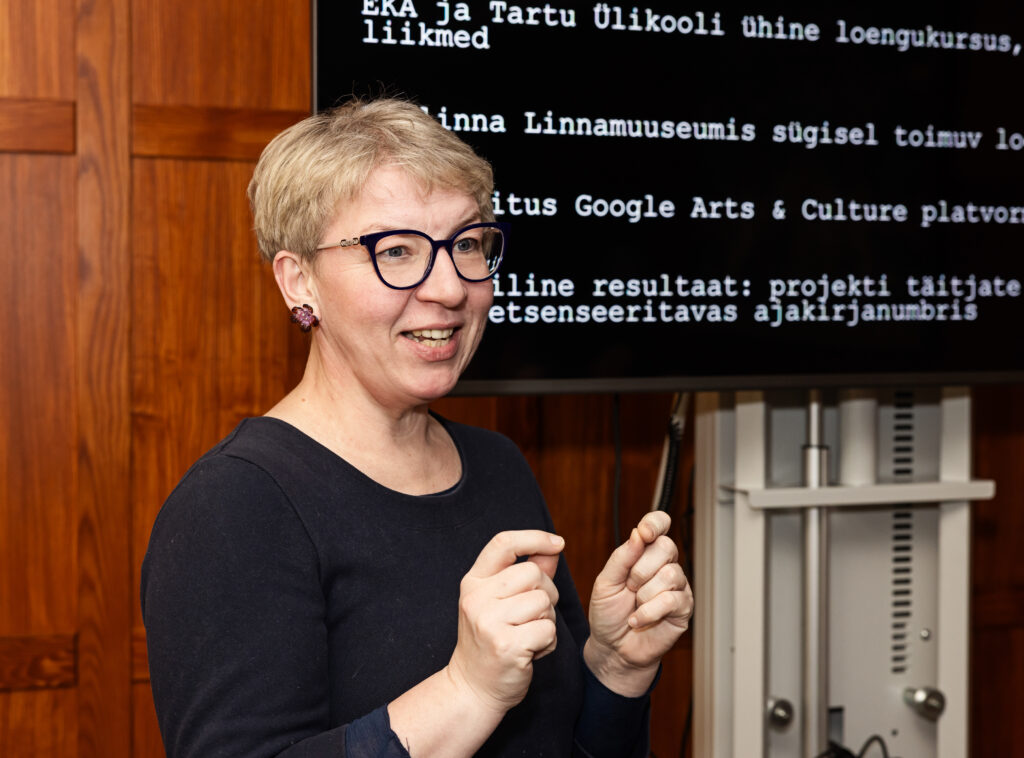
Large‑scale international research projects have been dedicated to tapestries. One such initiative was the EU‑funded project “Monitoring Damage in Historic Tapestries,” which brought together the royal collections and museums of Spain, England, and Belgium. The project is significant because the tapestries studied also date from the mid‑16th century. Extensive dye analyses were carried out on tapestry corpora across various museums, with the results examined at the Royal Institute for Cultural Heritage (KIK‑IRPA), where the Tallinn tapestry samples are now being analysed. KIK‑IRPA has a broad reference collection of dye samples from 16th‑century tapestries, providing an excellent basis for interpreting the Tallinn samples.
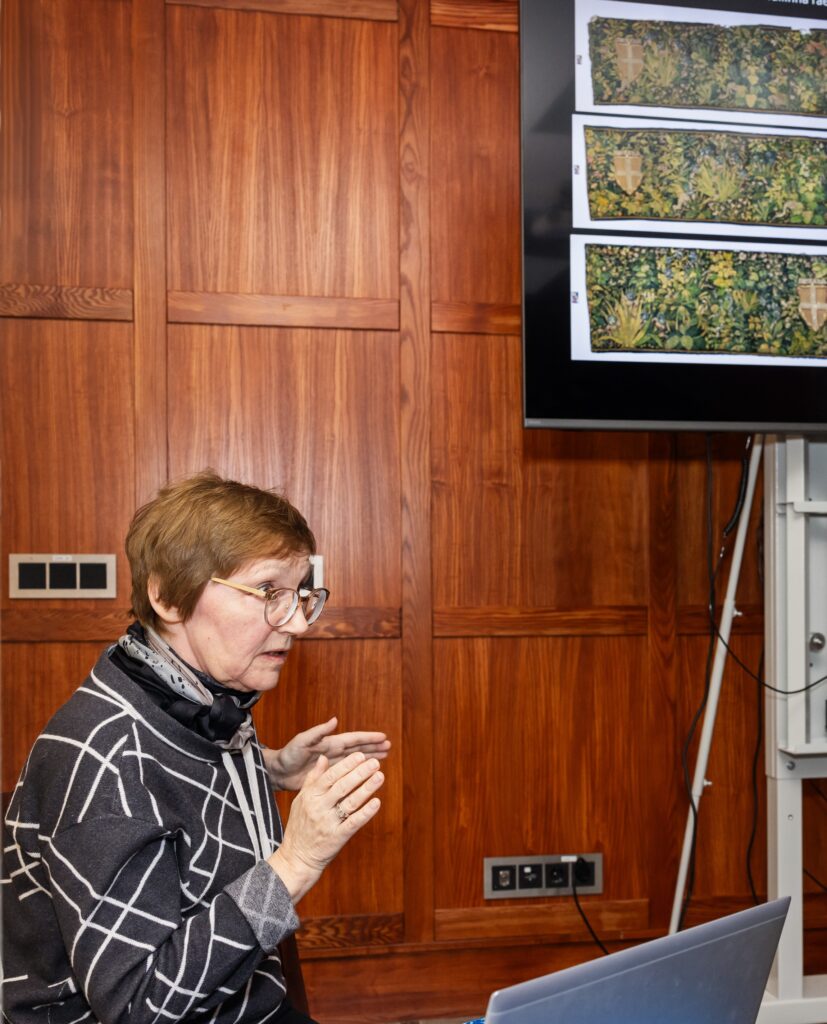
Pia Ehasalu, Research Director of the Tallinn City Museum, spoke about textile treasures in the context of the City Museum’s collections. 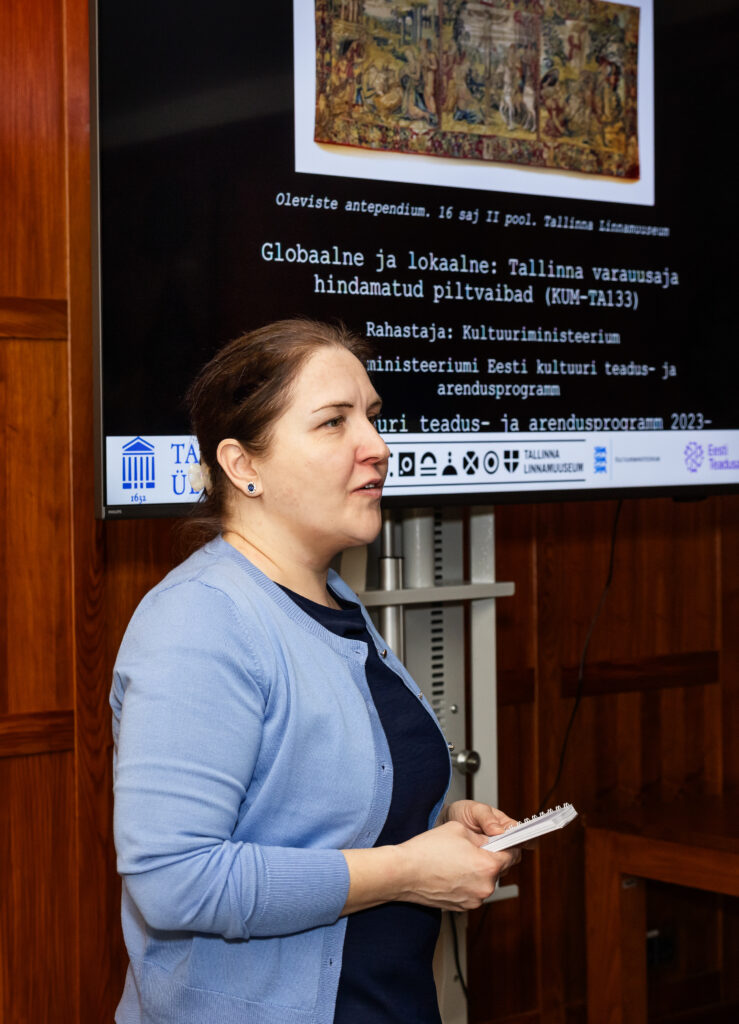
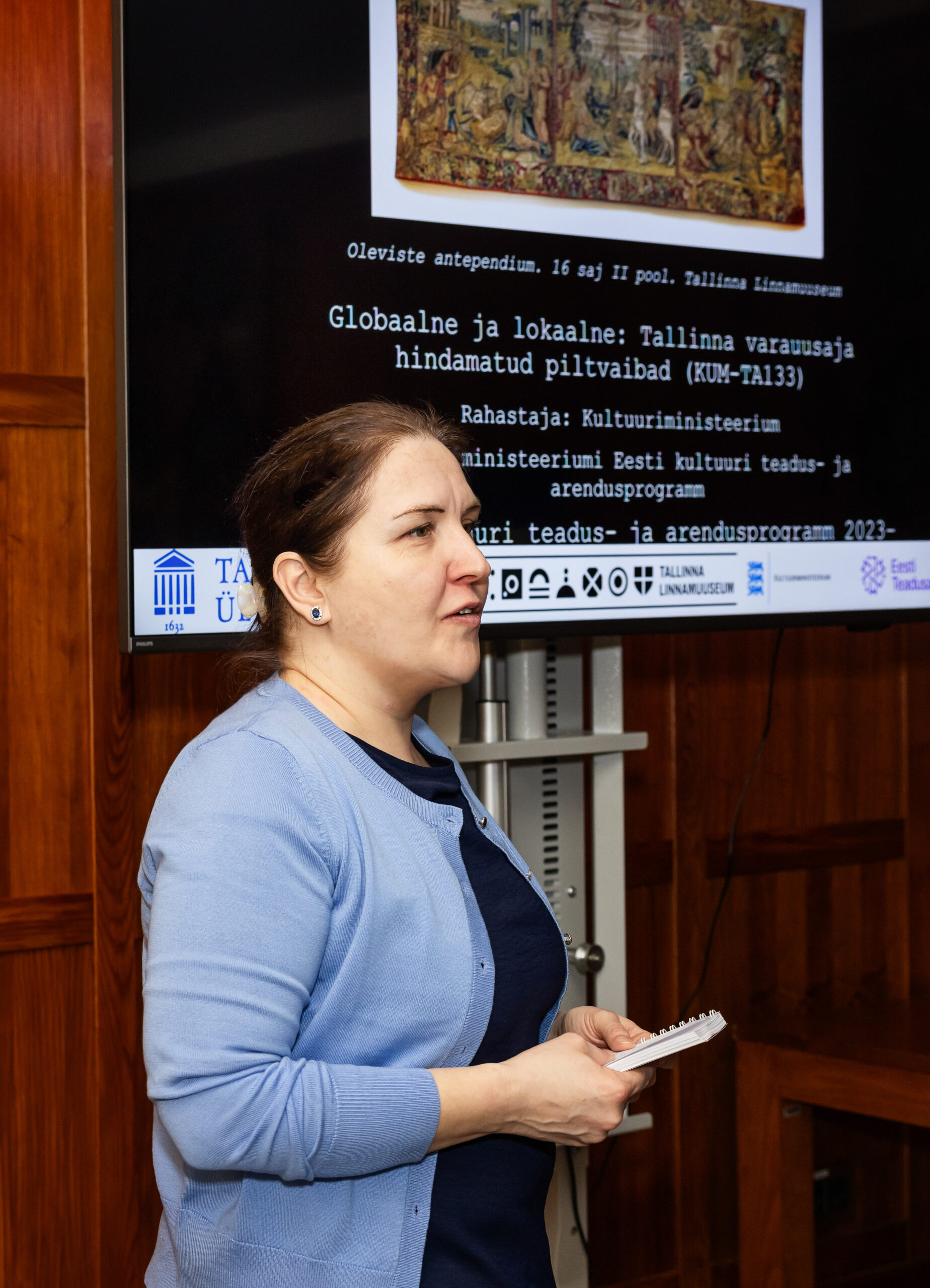
The project leader is Kerttu Palginõmm, a researcher in textile history at the Institute of History and Archaeology of the University of Tartu.
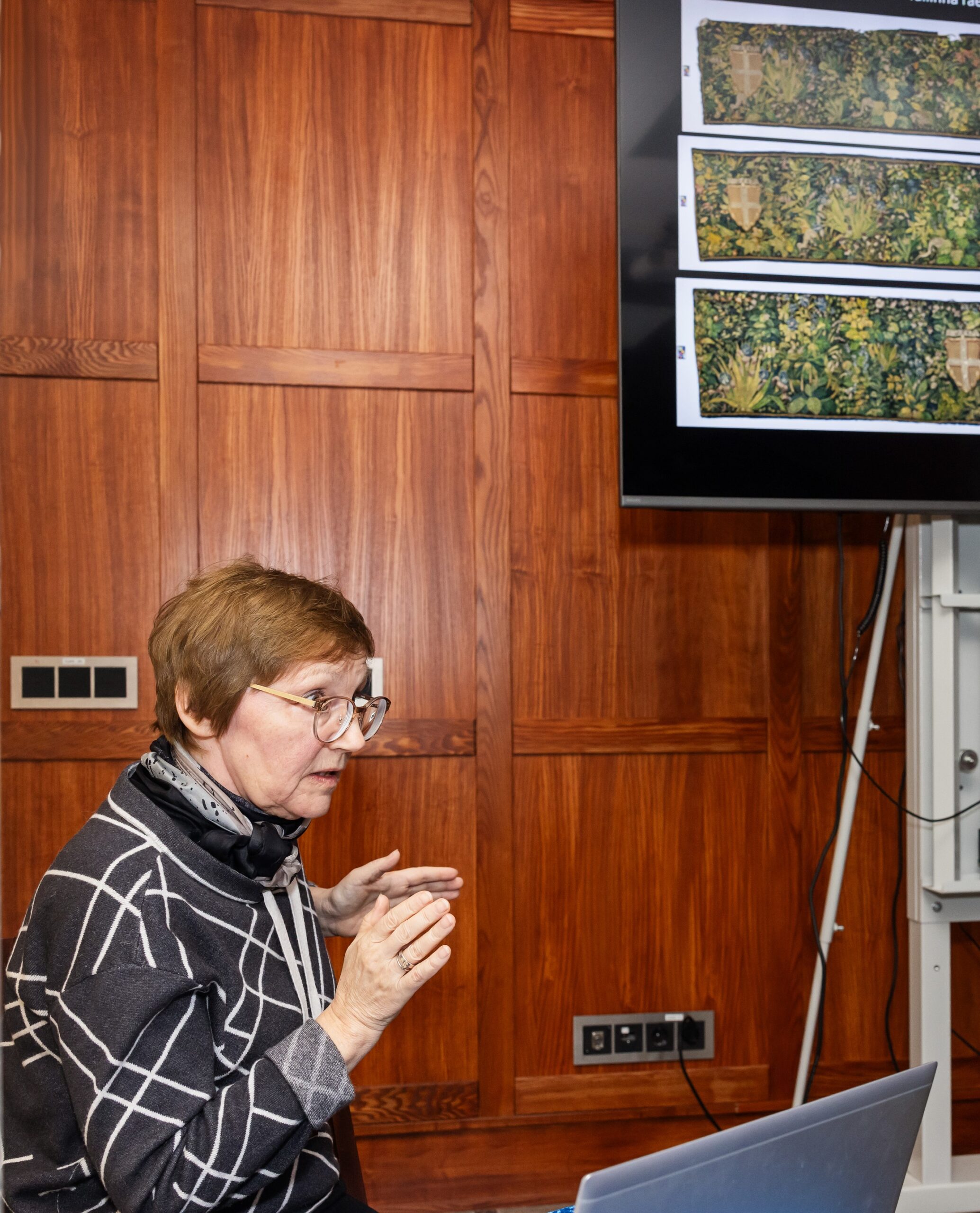
The dye and material samples were taken by Riina Rammo, while Hannes Vinnal is responsible for contextualising them within global trade history. The fact that one research project builds on another is highly valuable, as it shows how knowledge gained in one context can be applied to new objects of study. The project also takes earlier research into account.[1] Although limited dye and material analyses have been carried out on the tapestries before, the current research expands this perspective and provides a more comprehensive understanding of the materials and dyes used.
Goal: public display in the Tallinn City Museum’s Open Collections building
Last autumn, representatives of the “De Wit. Royal Tapestry Manufacturers” visited Estonia to assess the condition of the tapestries for conservation purposes, expressing admiration for their history and high quality. The dye and material samples are an important step toward conservation. The current state of conservation and the large dimensions of the works have so far prevented their display. In this regard, future hopes are tied to the planned Open Collections building of the Tallinn City Museum. A key aim of the project is to make the research results publicly accessible in the future, together with the conserved works.
The research project has significant international supporters. In addition to the De Wit and KIK‑IRPA, the project is supported by the Abegg‑Stiftung conservation and textile research centre in Switzerland. The Abegg-Stiftung collections include tapestries from the Enghien workshop, whose origins and iconography resemble those of Tallinn’s verdures. As part of the project, a research trip to Switzerland will take place in spring to study best practices in conservation and exhibition and to examine tapestry collections relevant to the project. A visit to Belgium is planned for the autumn to meet project partners. During the trip, we will visit the KIK‑IRPA research centre in Brussels as well as a conservation studio and museum in Mechelen. There are also plans to visit renowned tapestry scholar Professor Koen Brosens at the University of Leuven. Contributions to the understanding of tapestries have also been made by Professor Emeritus Guy Delmarcel of the University of Leuven and by former Tallinn City Museum researcher Urve Mankin.
As part of the project’s preparatory work, the Conservation and Digitisation Centre Kanut has updated the tapestries’ condition reports, and the museum has re-digitised images of the tapestries. Dye samples have also been taken, and in December 2025, they were handed over to KIK‑IRPA. We expect the dye analysis results in the autumn. The material samples are already being analysed at the University of Tartu’s archaeology laboratory.
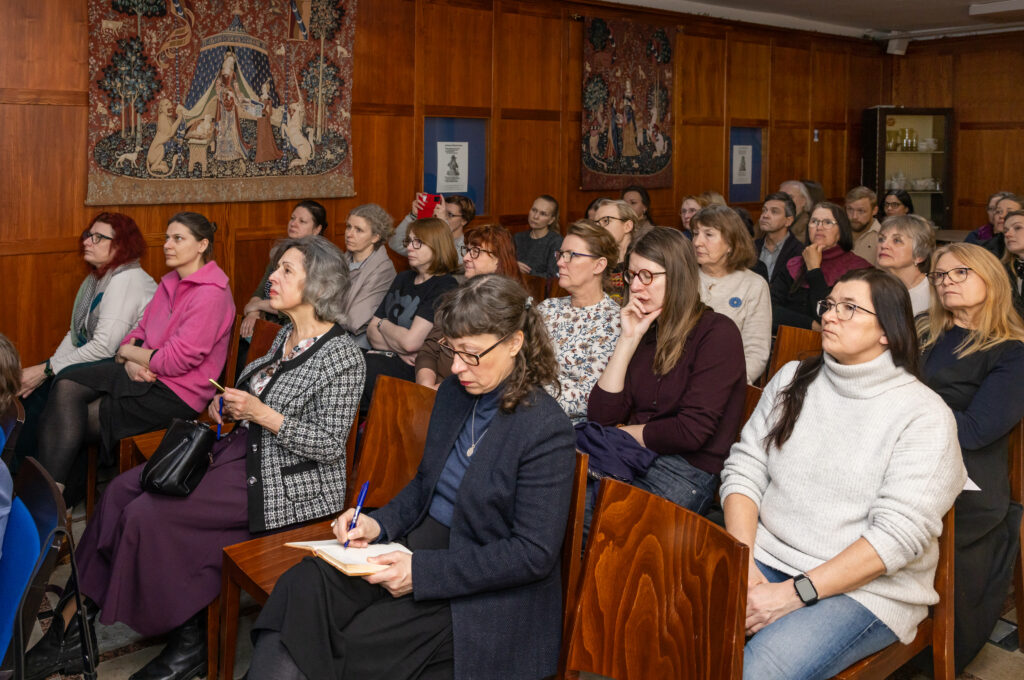
Next steps
The first half of the year is reserved for academic research. We will document our project journey regularly on the Tallinn City Museum’s blog and social media channels. In the autumn, the Tallinn City Museum will host a lecture series in which project members will present the research results to a broader culture‑interested audience. In late autumn and winter, an online lecture series is planned for students of the University of Tartu and the Estonian Academy of Arts, bringing together students from different disciplines. The project will culminate in the publication of the research results in the Baltic Journal of Art History, issued by the Department of Art History at the University of Tartu, in 2027.


