Kerttu Palginõmm, PhD, Research Fellow in History of Textile, University of Tartu, Faculty of Arts and Humanities, Institute of History and Archaeology
One of the aims of the research project “Global and Local: The Precious Tapestries of Early Modern Tallinn” (KUM-TA133) was to visit important research centers in Switzerland with our team. At the foot of a picturesque Swiss village lies the Abegg-Stiftung, dedicated to the collection, conservation, research, and exhibition of textiles. The renowned tapestry expert Guy Delmarcel recently referred to it to us as the Sistine Chapel of textile conservation. The foundation was established in the 1960s by Werner Abegg, an industrialist from Zürich, and his wife Margaret, an art historian. The family collected applied art, with a particular focus on textiles. In addition to research facilities and textile collections, the Abegg complex includes a museum, a library, and the Abegg family villa. The library, located in a neo-Baroque villa built in the 20th century, displays an important example of our tapestry research from a 16th-century Enghien workshop, which was also published in the Yearbook of the Tallinn City Museum.
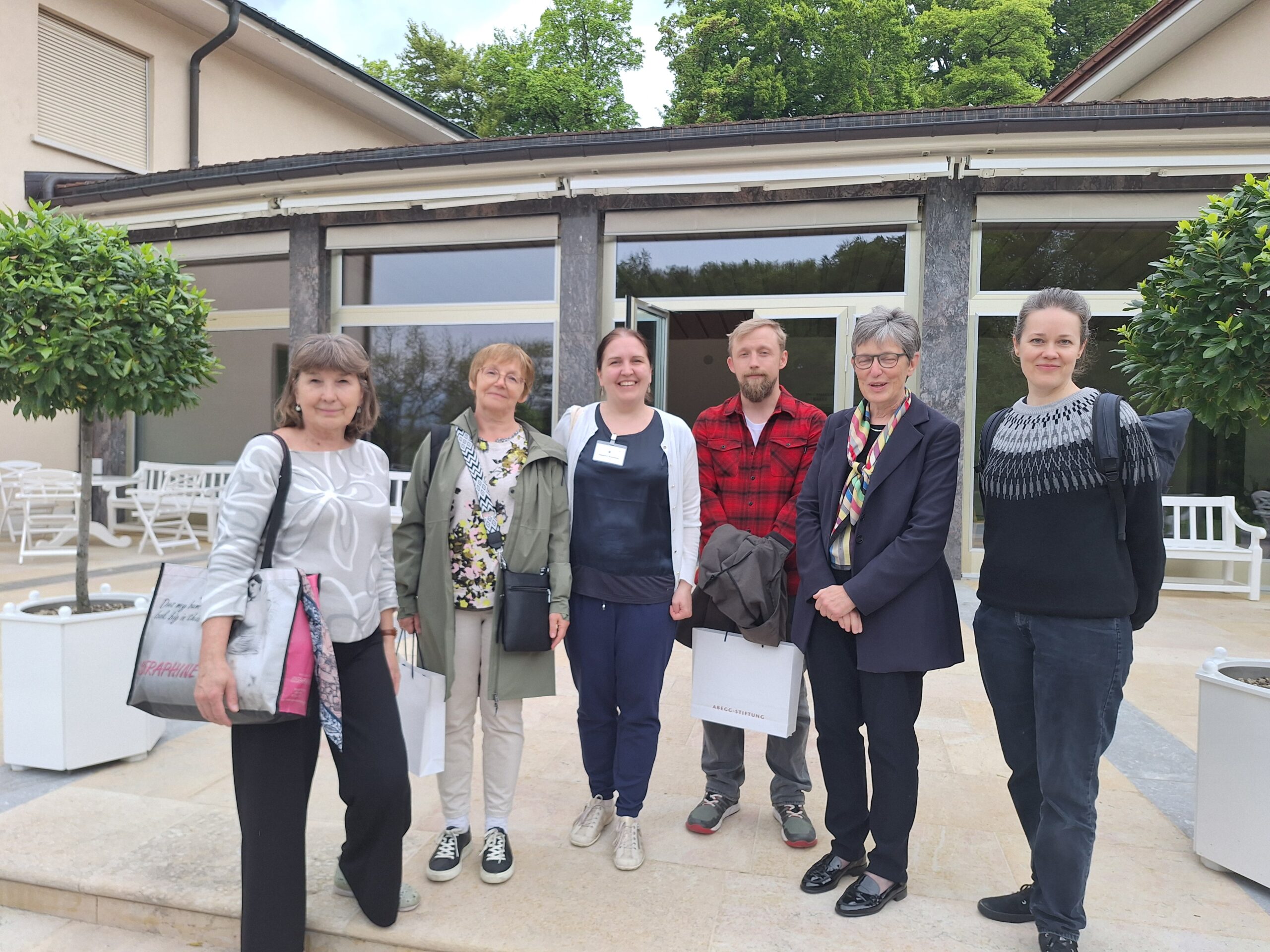
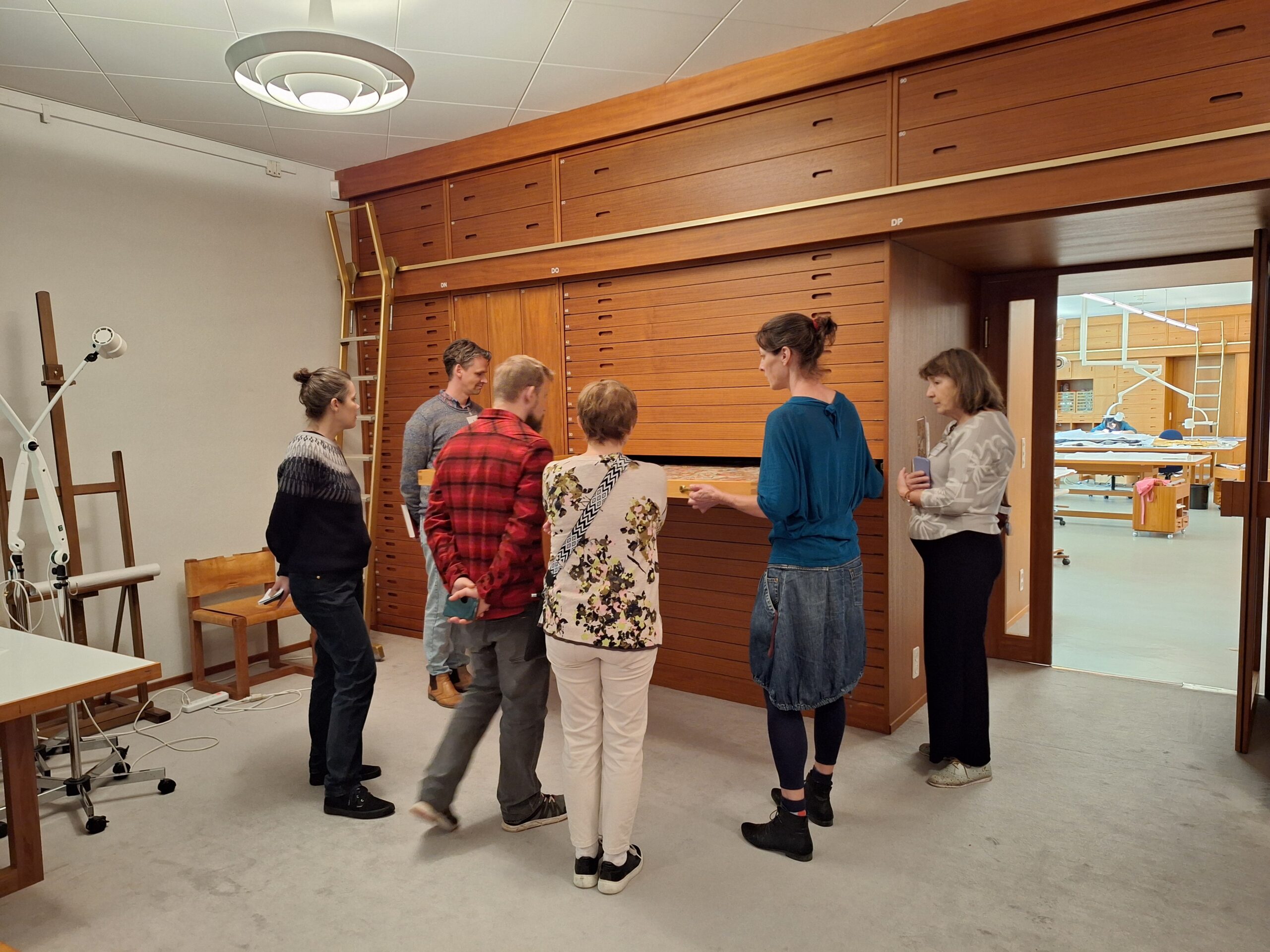
Our research group was received with special warmth everywhere in Switzerland, and we extend our particular thanks to the director of the Abegg-Stiftung, Regula Schorta. Spring in Switzerland was at its peak. At the Abegg-Stiftung, we visited the conservation center, an exhibition dedicated to ancient textiles, and Villa Abegg. The visit was accompanied by continuous consultation with conservators and curators, including Eveline Vetter and Anna Jolly. The Tallinn City Museum’s library was also enriched. At the same time, the trip helped to prepare for the conservation of the Tallinn City Museum’s tapestries and their future display.
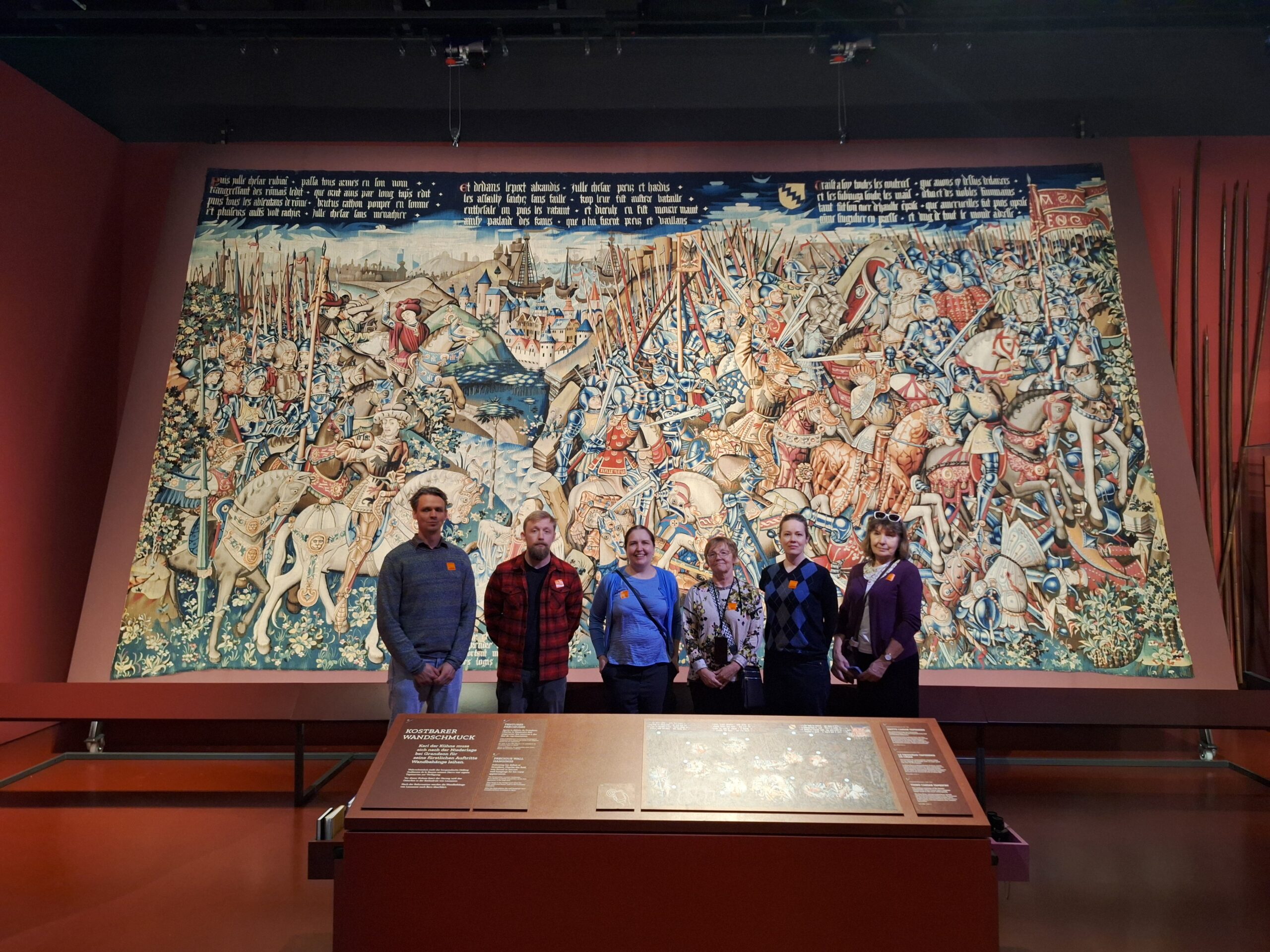
A visit to the Bern Historical Museum was equally valuable for our research group, which spent an entire day there. Particularly noteworthy was a morning visit to the studio, where conservator Maike Piecuch introduced us to a tapestry from the Caesar series. The series was likely commissioned in the 15th century by Charles the Bold, Duke of Burgundy, or his close associate Guillaume de la Baume. The Burgundian court made a significant contribution to tapestry art, later carried on by their successors, the Habsburgs. This is an extremely valuable and high-quality series that incorporates gold thread in addition to silk. Maike Piecuch provided us with an in-depth introduction to the preparatory work for the tapestry’s conservation, its conservation at the De Wit manufactory, and modern display principles. We were delighted to gain insight into such thorough work. Later, we examined the conserved piece more closely in the exhibition on the Battle of Murten.
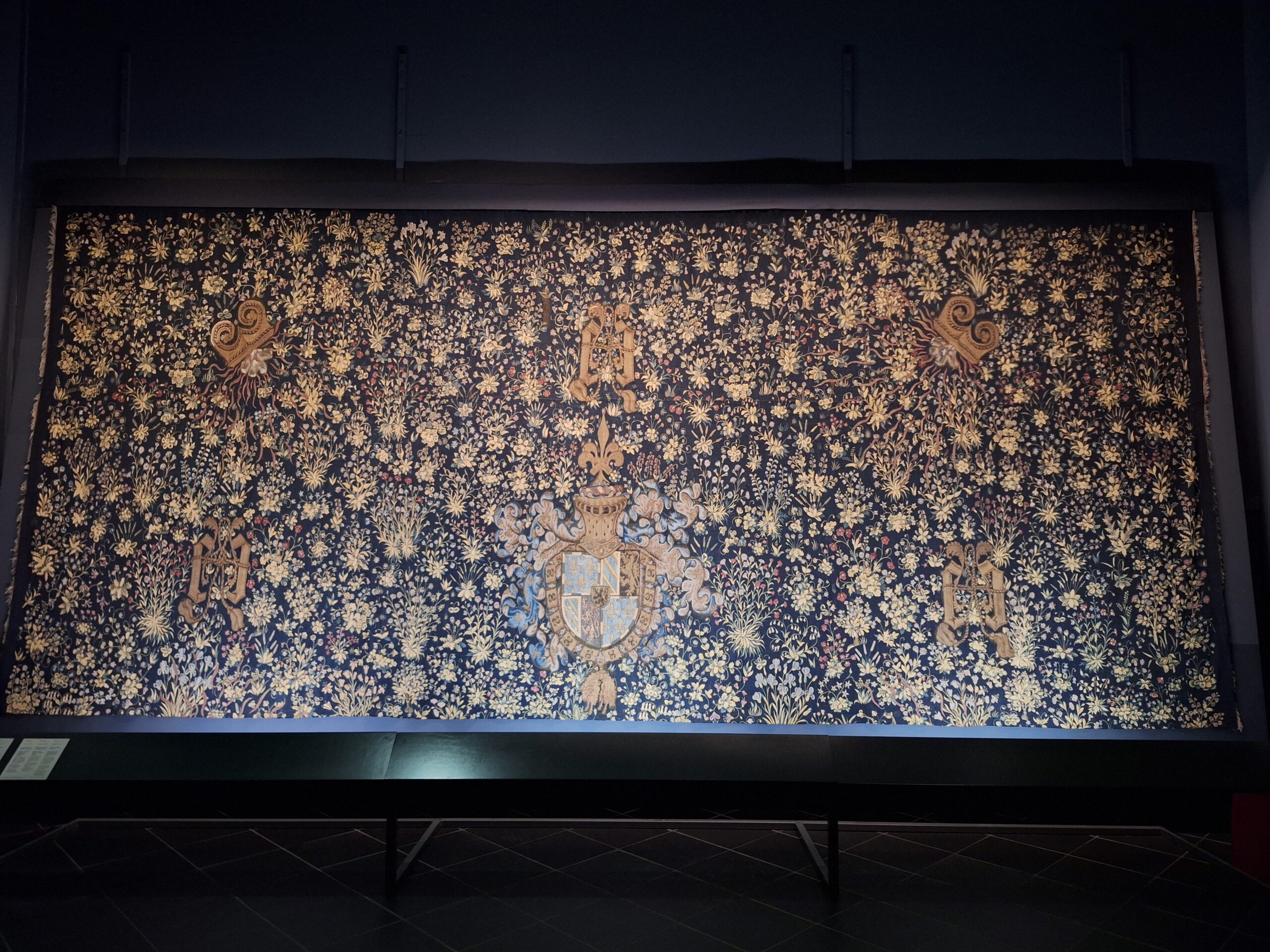
The Bern Historical Museum is particularly important because of the Burgundian spoils that entered Swiss possession at the end of the 15th century; it houses an exceptional collection. Among these, one of the most interesting pieces for us was a verdure commissioned from Brussels by Philip the Good, Duke of Burgundy, regarded as a masterpiece of its time. The work dates from 1466 and originally formed part of an eight-piece series. Today, only one tapestry survives; the others are known only through partial watercolor depictions. Similar to the plants depicted in the Tallinn verdures, the plants in the Bern tapestry have been studied botanically and identified—397 in total. As the tapestry is not fully preserved, the original number may have exceeded 500. The work features the Burgundian coat of arms and the emblems of Philip the Good, such as the fire steel and flint. The connection to Tallinn’s verdure tapestries lies precisely in the coats of arms placed amid a paradise-like abundance of plants. Thus, Philip the Good’s “thousand-flower” tapestry conveys the idea that the Duchy of Burgundy is a paradise. The repetition of Tallinn’s small coat of arms on the five verdure tapestries in the Tallinn City Museum conveys the same message.
In studying the collections of the Bern Historical Museum, our main focus was on tapestries. The collections were introduced to us by Sabrina Schmid, a doctoral student at the University of Zürich, with whom we also viewed the museum’s rare tapestries and valuable embroideries. Once again, the focus was on exhibition policies, which are important in light of the Tallinn City Museum’s planned Open Collection building. During the trip, Kerttu Palginõmm and Pia Ehasalu also visited the Bern Art Museum, where they examined the so-called New Hollstein series, from which they indeed found interesting information.
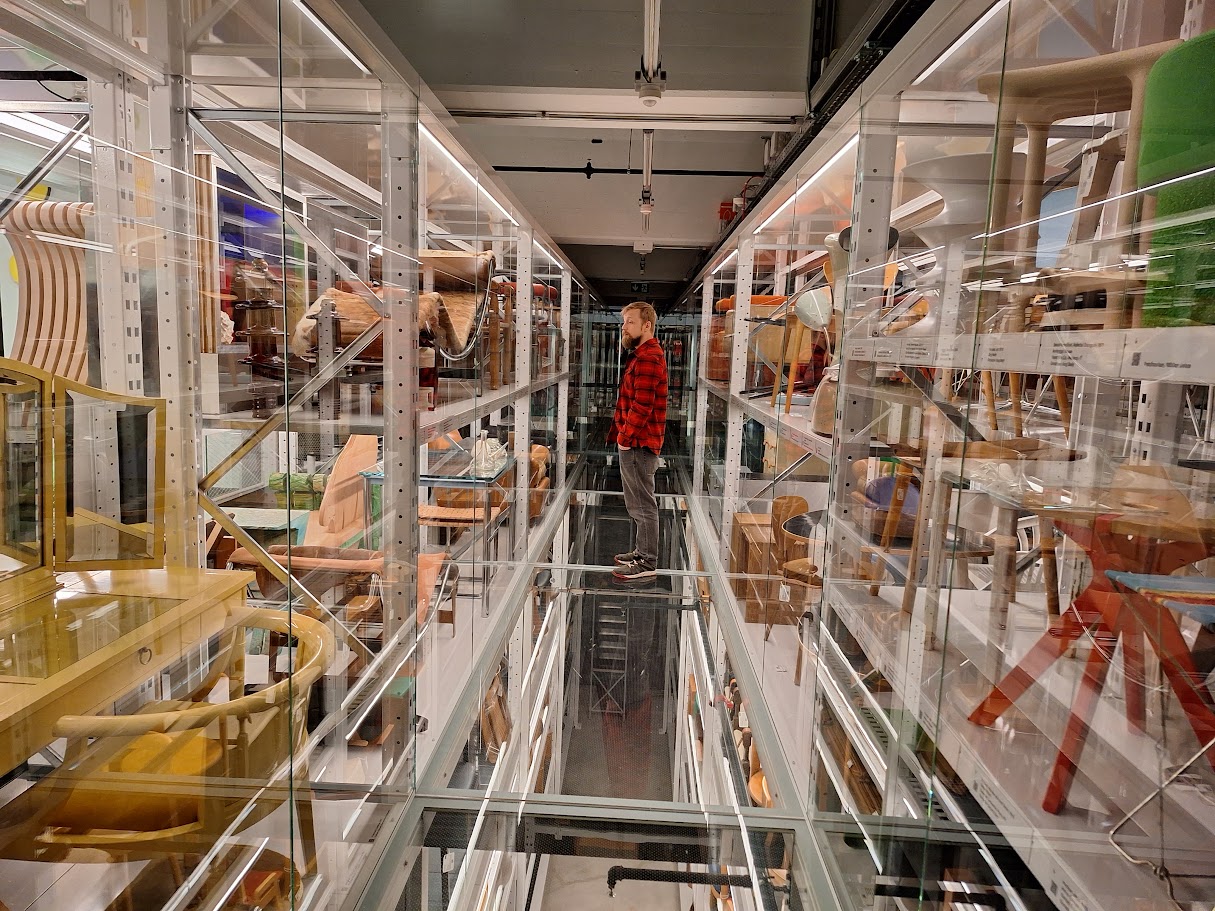
The trip concluded with visits to Zürich’s major museums. Our group visited Switzerland’s largest art museum, the Kunsthaus Zürich, as well as the National Museum and the Design Museum. At the latter, we had the opportunity to learn about open collection facilities and solutions. One of the objectives of the research project was to enhance our local expertise and to familiarise ourselves with contemporary conservation, storage, and exhibition policies. All this serves to organize, preserve, and present the future of the tapestries.
The research project KUM-TA133 is funded by the Ministry of Culture’s research and development program “Research and Development Program of Estonian Culture 2023–2026.”


